Winterberry Holly
For sale in Lawrenceville, GA
- Moderate (1 ft/year)
- Full Sun to Part Shade
- Cold hardy to USDA Zone 8a
- Deer resistant
Secure checkoutLicensed & insured installation crew
About Winterberry Holly
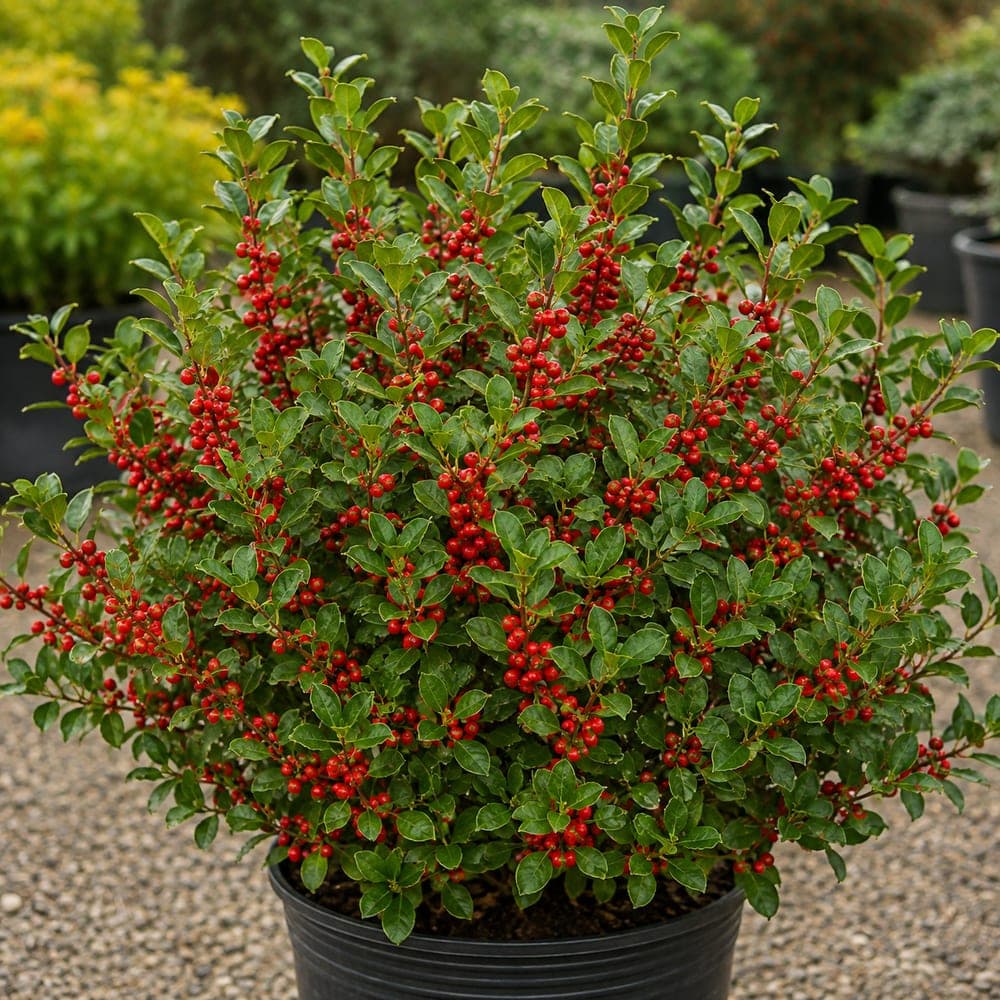
Winterberry Holly (Ilex verticillata) is a native deciduous holly found in wetlands and moist woodland edges throughout the Eastern United States, including parts of Georgia, valued for a dramatic trait no evergreen holly can match: it drops all its leaves in fall, leaving bare branches completely covered in bright red (or occasionally orange or gold) berries that persist and intensify in visual impact through winter, when little else in the landscape offers color. It grows to 6-10 feet tall and 6-8 feet wide and, like American Holly, is dioecious, requiring both a male and female plant nearby for the females to set their signature berry display, so at least one male pollinator variety should be planted within range of several female plants. It tolerates consistently moist to seasonally wet soil better than most hollies, making it a strong choice for a low spot or rain garden in a Lawrenceville yard, though it also adapts to average garden soil with regular water. Its bare, berry-covered winter branches are prized for holiday cut arrangements as well as garden display.
🚚 Delivery available to Lawrenceville and all of Gwinnett County — see our service area for exact timing.
Plant Specifications
| Mature Height | 6-10 ft |
|---|---|
| Mature Width | 6-8 ft |
| Sun Requirements | Full Sun to Part Shade |
| Water Needs | Moderate — tolerates wet soil |
| Bloom Season | N/A (small spring flowers; berries need male and female plants) |
| Growth Rate | Moderate (1 ft/year) |
| USDA Hardiness Zone | 8a |
| Deer Resistant | Yes |
| Pet Safe | Check with a vet |
| Native to Georgia | Yes |
Planting Instructions & Regional Tips
Plant Winterberry Holly in full sun to part shade in moist to average soil; it tolerates wetter conditions than most hollies, making it suitable for low spots or rain gardens. Plant at least one male cultivar for every 6-8 female plants to ensure berry production. Water regularly, especially during dry spells, since it prefers more consistent moisture than typical evergreen hollies.
Fast Facts
- Native deciduous holly — drops leaves to reveal bare, berry-covered branches
- Mature size: 6-10 ft tall, 6-8 ft wide
- Dioecious — needs both male and female plants for berries
- Tolerates wet soil better than most hollies
- Deer resistant, dramatic winter berry display
- Popular for holiday cut-branch arrangements
Pairs Well With
Winterberry Holly FAQs
Do you need a male Winterberry Holly for berries?
Yes, Winterberry Holly is dioecious like American Holly, so female plants need a male Winterberry Holly growing within pollinating range, typically within 30-50 feet, to set their signature red berry display. One male plant can typically pollinate 6-8 female plants.
Is Winterberry Holly native to Georgia?
Yes, Winterberry Holly is native to Georgia and the Southeastern United States, which makes it naturally well adapted to the region's clay soils, summer humidity, and Zone 8a climate. Native status generally means less supplemental water and fertilizer are needed once the plant is established in a Lawrenceville landscape.