Black-Eyed Susan
For sale in Lawrenceville, GA
- Fast, self-seeds readily
- Full Sun to Part Shade
- Cold hardy to USDA Zone 8a
- Deer resistant
Secure checkoutLicensed & insured installation crew
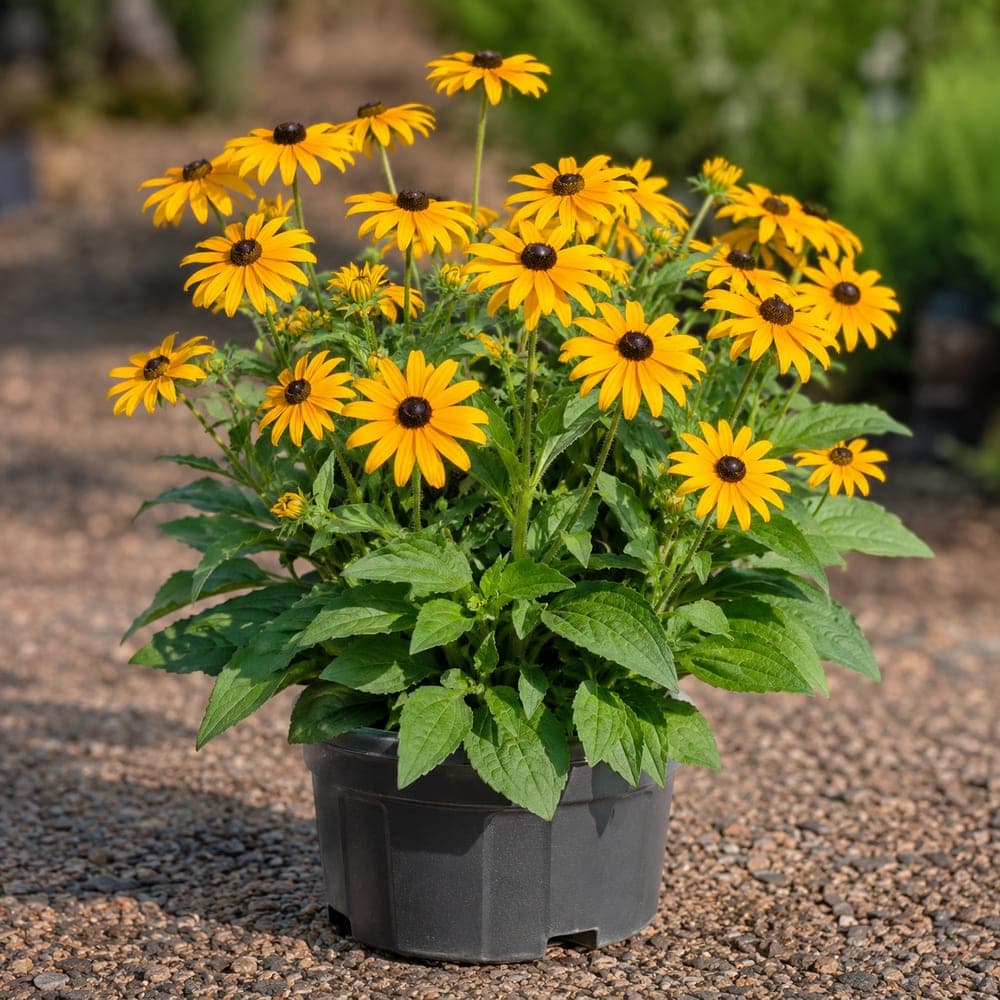
About Black-Eyed Susan
Black-Eyed Susan (Rudbeckia fulgida and Rudbeckia hirta) is a native Georgia wildflower and one of the most reliable summer-blooming perennials in the Southeast, producing bright golden-yellow daisy flowers with a distinctive dark brown center from summer through fall. It grows quickly to 2-3 feet tall and 1.5-2 feet wide and self-seeds readily, gradually naturalizing into a fuller drift over a few seasons if seed heads are left standing rather than deadheaded. As a true native, it thrives in Georgia's clay soil, heat, and humidity without special care, and once established it is notably drought tolerant, needing supplemental water only during extended dry spells. It is a major pollinator plant, attracting bees and butterflies throughout its long bloom season, and its seed heads provide winter food for goldfinches and other songbirds if left standing rather than cut back in fall. Black-Eyed Susan is deer resistant, an important trait that sets it apart from many other flowering perennials in landscapes with regular deer pressure.
🚚 Delivery available to Lawrenceville and all of Gwinnett County — see our service area for exact timing.
Plant Specifications
| Mature Height | 2-3 ft |
|---|---|
| Mature Width | 1.5-2 ft |
| Sun Requirements | Full Sun to Part Shade |
| Water Needs | Low to Moderate — drought tolerant once established |
| Bloom Season | Summer through Fall |
| Growth Rate | Fast, self-seeds readily |
| USDA Hardiness Zone | 8a |
| Deer Resistant | Yes |
| Pet Safe | Yes |
| Native to Georgia | Yes |
Planting Instructions & Regional Tips
Plant Black-Eyed Susan in full sun to part shade in well-drained soil; it tolerates Georgia clay without amendment. Space plants 1.5-2 feet apart, allowing room for self-seeding to fill in over time. Water regularly the first season; established plants are drought tolerant. Leave seed heads standing through winter to feed songbirds, then cut back in late winter before new spring growth.
Fast Facts
- Georgia native wildflower
- Golden-yellow daisy flowers with dark brown center
- Mature size: 2-3 ft tall, 1.5-2 ft wide
- Blooms summer through fall, self-seeds readily
- Deer resistant, strong pollinator and songbird plant
- Drought tolerant once established
Pairs Well With
Black-Eyed Susan FAQs
Is Black-Eyed Susan native to Georgia?
Yes, Black-Eyed Susan (Rudbeckia species) is native to Georgia and much of the Eastern United States, commonly found in meadows, roadsides, and open woodland edges throughout the Piedmont region. Its native status makes it exceptionally well adapted to local clay soils and summer heat with minimal care.
Is Black-Eyed Susan deer resistant?
Yes, Black-Eyed Susan is considered deer resistant, making it a reliable choice for Gwinnett County properties bordering wooded areas with regular deer traffic. As with any "deer resistant" plant, hungry deer in a hard winter may still sample new growth occasionally, but damage is typically minimal.