Kousa Dogwood
For sale in Lawrenceville, GA
- Slow to Moderate (1 ft/year)
- Full Sun to Part Shade
- Cold hardy to USDA Zone 8a
- Deer resistant
Secure checkoutLicensed & insured installation crew
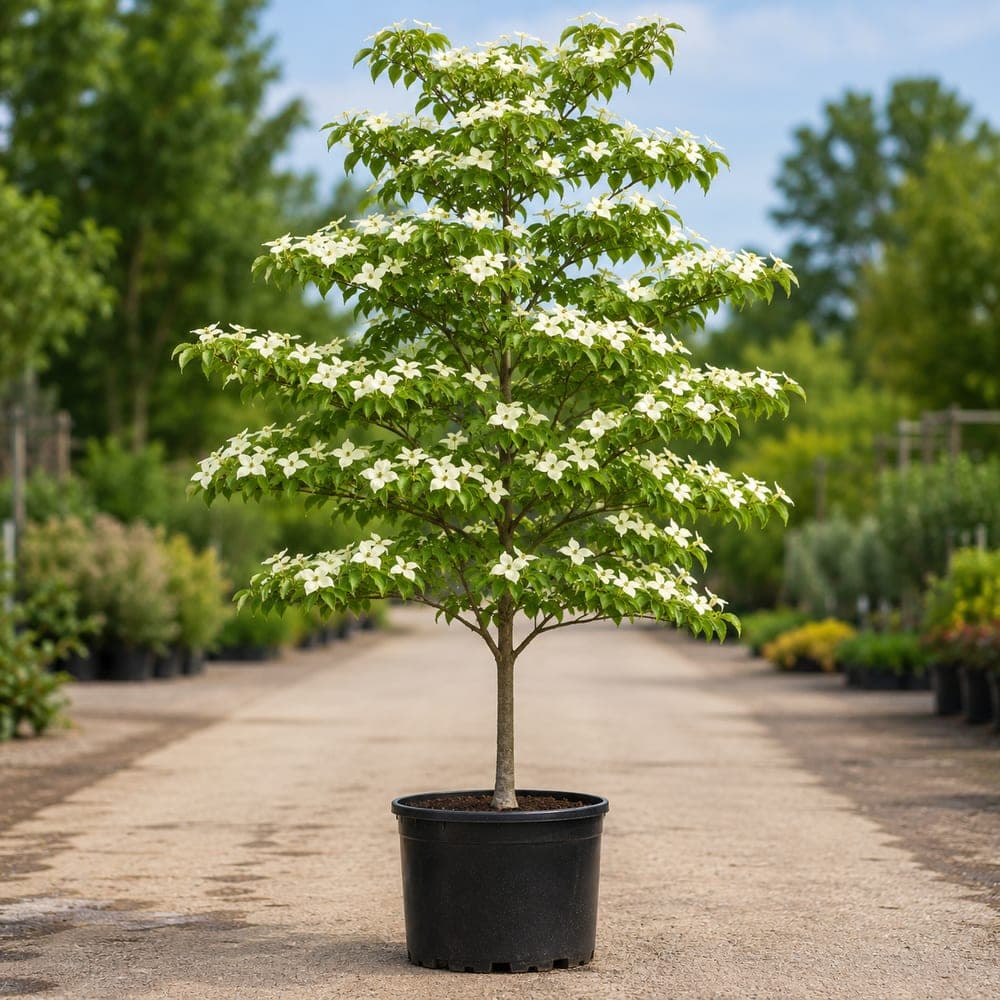
About Kousa Dogwood
Kousa Dogwood (Cornus kousa) is an Asian dogwood species that blooms two to three weeks later than native White Flowering Dogwood, extending the dogwood bloom season into late spring, and offers significantly better resistance to dogwood anthracnose and borer problems that affect the native species in stressed conditions. Its pointed white (or pink in some cultivars) bracts sit upright above the foliage rather than facing outward like native dogwood, giving a distinctly different, layered look, and it produces unusual raspberry-like red fruit in late summer that is edible, though rarely eaten by humans, and attractive to wildlife. It tolerates more full sun than native dogwood, an important practical advantage for open Lawrenceville lots without mature tree canopy to provide the dappled shade native dogwood prefers. Bark exfoliates attractively with age, adding winter interest. Growing slowly to moderately to 20-30 feet tall and wide, Kousa Dogwood has become an increasingly popular alternative to native dogwood specifically because of its improved disease resistance and sun tolerance.
🚚 Delivery available to Lawrenceville and all of Gwinnett County — see our service area for exact timing.
Plant Specifications
| Mature Height | 20-30 ft |
|---|---|
| Mature Width | 20-25 ft |
| Sun Requirements | Full Sun to Part Shade |
| Water Needs | Moderate — consistent moisture, avoid drought stress |
| Bloom Season | Late Spring (2-3 weeks after native dogwood) |
| Growth Rate | Slow to Moderate (1 ft/year) |
| USDA Hardiness Zone | 8a |
| Deer Resistant | Yes |
| Pet Safe | Yes |
| Native to Georgia | No |
Planting Instructions & Regional Tips
Plant Kousa Dogwood in full sun to part shade; unlike native White Flowering Dogwood, it tolerates considerably more direct sun, making it a better fit for open, sunnier Lawrenceville lots. Amend Georgia clay with compost for drainage and mulch widely to protect its root zone. Water consistently through establishment; while more disease resistant than native dogwood, it still benefits from reduced drought stress.
Great For
Fast Facts
- Blooms 2-3 weeks later than native White Flowering Dogwood
- Mature size: 20-30 ft tall and wide
- Better resistance to anthracnose and borer than native dogwood
- Tolerates more full sun than native dogwood
- Unusual raspberry-like edible fruit in late summer
- Deer resistant, exfoliating bark for winter interest
Pairs Well With
Kousa Dogwood FAQs
Is Kousa Dogwood better than native dogwood?
Kousa Dogwood offers significantly better resistance to anthracnose and borer problems than native White Flowering Dogwood, plus tolerance for more direct sun, making it a more forgiving choice for open, sunny yards. Native dogwood, however, better supports local wildlife and has deeper ecological ties to Georgia's native ecosystem.
Can you eat Kousa Dogwood fruit?
Yes, Kousa Dogwood produces raspberry-like red fruit in late summer that is technically edible, with a sweet, custard-like flavor, though it's rarely eaten by people due to its large seeds and grainy texture. Birds and wildlife readily consume the fruit instead.