Eastern Red Cedar
For sale in Lawrenceville, GA
- Moderate to Fast (1-2 ft/year)
- Full Sun
- Cold hardy to USDA Zone 7a-9b
- Deer resistant
Secure checkoutLicensed & insured installation crew
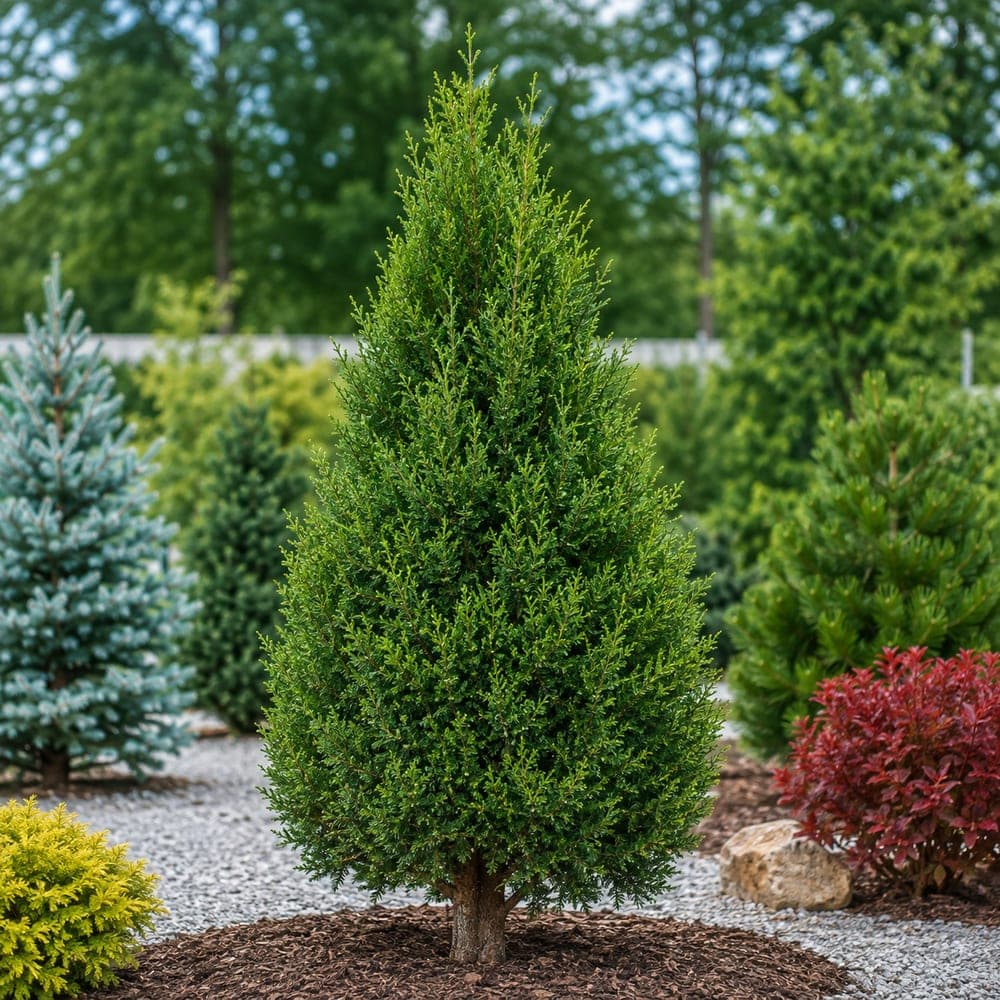
About Eastern Red Cedar
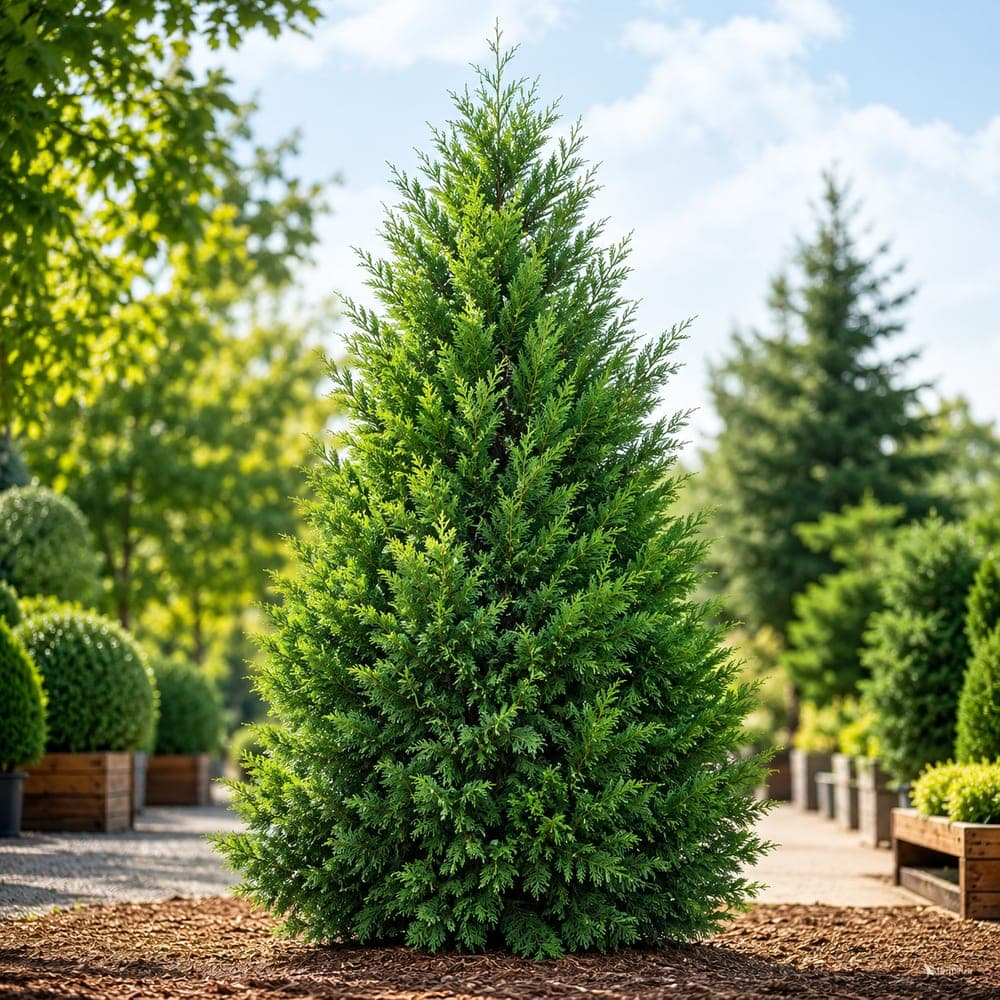
Eastern Red Cedar (Juniperus virginiana) is a native evergreen conifer found throughout Georgia's old fields and fence rows, valued in the landscape for its columnar to pyramidal form, aromatic reddish wood, and exceptional toughness in poor, dry, rocky soil where few other screening plants survive. It reaches 30-40 feet tall and 8-15 feet wide, with fine scale-like blue-green foliage that takes on a purplish-bronze cast in winter. Female trees produce small blue-gray berry-like cones that are an important winter food source for cedar waxwings, and the tree's common name comes directly from that bird. As a true native, it thrives in Gwinnett County's clay soil and tolerates drought, heat, and poor fertility better than nearly any other privacy conifer, requiring essentially no maintenance once established. It does host cedar-apple rust, a fungal disease that also affects apple trees, so it is best not planted within a few hundred feet of an orchard planting. Its wide native range, from Zone 7a into warmer Zone 9b areas, reflects its broad adaptability.
🚚 Delivery available to Lawrenceville and all of Gwinnett County — see our service area for exact timing.
Plant Specifications
| Mature Height | 30-40 ft |
|---|---|
| Mature Width | 8-15 ft |
| Sun Requirements | Full Sun |
| Water Needs | Low — very drought tolerant once established |
| Bloom Season | N/A (evergreen conifer; female trees produce blue-gray berry cones) |
| Growth Rate | Moderate to Fast (1-2 ft/year) |
| USDA Hardiness Zone | 7a-9b |
| Deer Resistant | Yes |
| Pet Safe | Yes |
| Native to Georgia | Yes |
Planting Instructions & Regional Tips
Eastern Red Cedar thrives in full sun and tolerates poor, dry, rocky, or clay soils better than almost any other evergreen. Space plants 8-10 feet apart for a naturalistic screen. Water weekly the first season; afterward it is highly drought tolerant and needs no supplemental irrigation. Avoid planting near apple or crabapple trees due to shared susceptibility to cedar-apple rust.
Fast Facts
- Georgia native evergreen conifer, mature height 30-40 ft
- Extremely drought and poor-soil tolerant
- Female trees produce berries that feed cedar waxwings
- Aromatic reddish heartwood, purplish winter foliage cast
- Deer resistant, wide hardiness range 7a-9b
- Can host cedar-apple rust — avoid planting near apple trees
Pairs Well With
Eastern Red Cedar FAQs
Should I plant Eastern Red Cedar near apple trees?
No, Eastern Red Cedar hosts cedar-apple rust, a fungal disease that alternates between cedar and apple trees to complete its life cycle, and can significantly damage apple foliage and fruit. Keep red cedars at least a few hundred feet from any apple or crabapple plantings when possible.
Is Eastern Red Cedar good for poor soil?
Yes, Eastern Red Cedar is one of the most soil-adaptable native conifers, thriving in poor, dry, rocky, or compacted clay where many other screening plants struggle. This makes it a practical choice for difficult sites across Gwinnett County where soil quality is a concern.