Petunia
For sale in Lawrenceville, GA
- Fast
- Full Sun
- Cold hardy to USDA Zone 8a (annual; grown as warm-season bedding plant)
- Georgia grown & ready to plant
Secure checkoutLicensed & insured installation crew
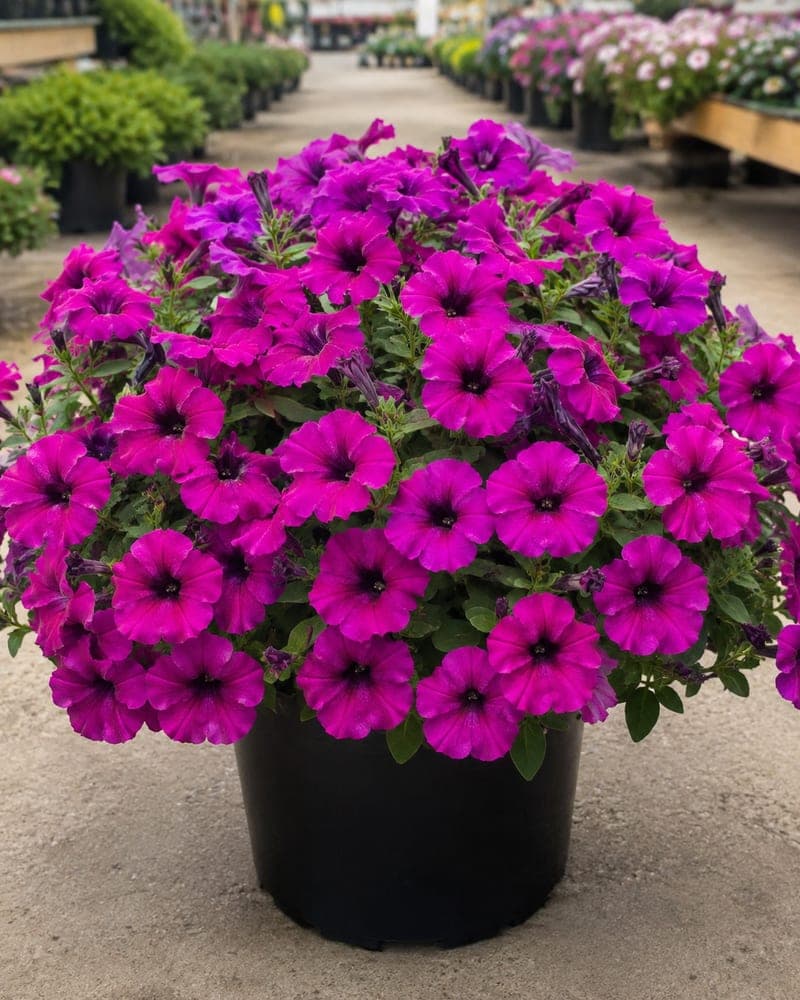
About Petunia
Petunia is a classic warm-season annual bedding plant grown for its abundant, trumpet-shaped flowers in nearly every color available, blooming continuously from spring planting until the first fall frost when given consistent care. Modern trailing types like the Wave and Supertunia series spread and cascade 1-2 feet, making them especially popular for hanging baskets, window boxes, and container plantings, while mounding types work well in garden beds and borders. Petunias need full sun, at least 6 hours daily, for the heaviest bloom, and consistent moisture, since Georgia's hot summer conditions can dry out container plantings quickly, sometimes requiring daily watering for hanging baskets in peak heat. Regular fertilization, roughly every 1-2 weeks with a balanced liquid fertilizer, supports their fast growth and continuous flowering habit. Older petunia varieties benefit from deadheading and occasional shearing to prevent legginess and encourage rebloom, though many modern self-cleaning varieties require less maintenance. As a tender annual, Petunia is killed by frost and is typically replanted each spring in Georgia gardens.
🚚 Delivery available to Lawrenceville and all of Gwinnett County — see our service area for exact timing.
Plant Specifications
| Mature Height | 0.5-1 ft |
|---|---|
| Mature Width | 1-2 ft (trailing or mounding) |
| Sun Requirements | Full Sun |
| Water Needs | Moderate — regular water, avoid letting soil fully dry |
| Bloom Season | Spring through Fall (until first frost) |
| Growth Rate | Fast |
| USDA Hardiness Zone | 8a (annual; grown as warm-season bedding plant) |
| Deer Resistant | No |
| Pet Safe | Check with a vet |
| Native to Georgia | No |
Planting Instructions & Regional Tips
Plant Petunia in full sun after the last spring frost date, typically mid-April in the Lawrenceville area. Use well-drained soil or potting mix, since petunias are prone to root rot in soggy conditions. Water regularly, especially in containers and hanging baskets during summer heat, and fertilize every 1-2 weeks to support continuous blooming. Shear back leggy growth mid-summer to refresh the plant for fall flowering.
Fast Facts
- Classic warm-season annual, blooms spring through fall
- Trailing types (Wave, Supertunia) spread 1-2 ft, ideal for baskets
- Needs full sun (6+ hours) for the heaviest bloom
- Regular fertilization supports continuous flowering
- Killed by frost — replanted each spring in Georgia
- Not deer resistant; mildly toxic if ingested by pets
Pairs Well With
Petunia FAQs
When should I plant petunias in Georgia?
Plant Petunias in full sun after the last spring frost date, typically mid-April in the Lawrenceville, Georgia area, to avoid frost damage to tender new growth. They will bloom continuously through summer and into fall until the first hard frost kills the plant in autumn.
Do deer eat Petunia?
Yes, Petunia is not considered deer resistant and can be browsed by deer, especially newly planted specimens. In Gwinnett County areas with heavy deer pressure, fencing or repellent application is worth considering until the plant is well established.